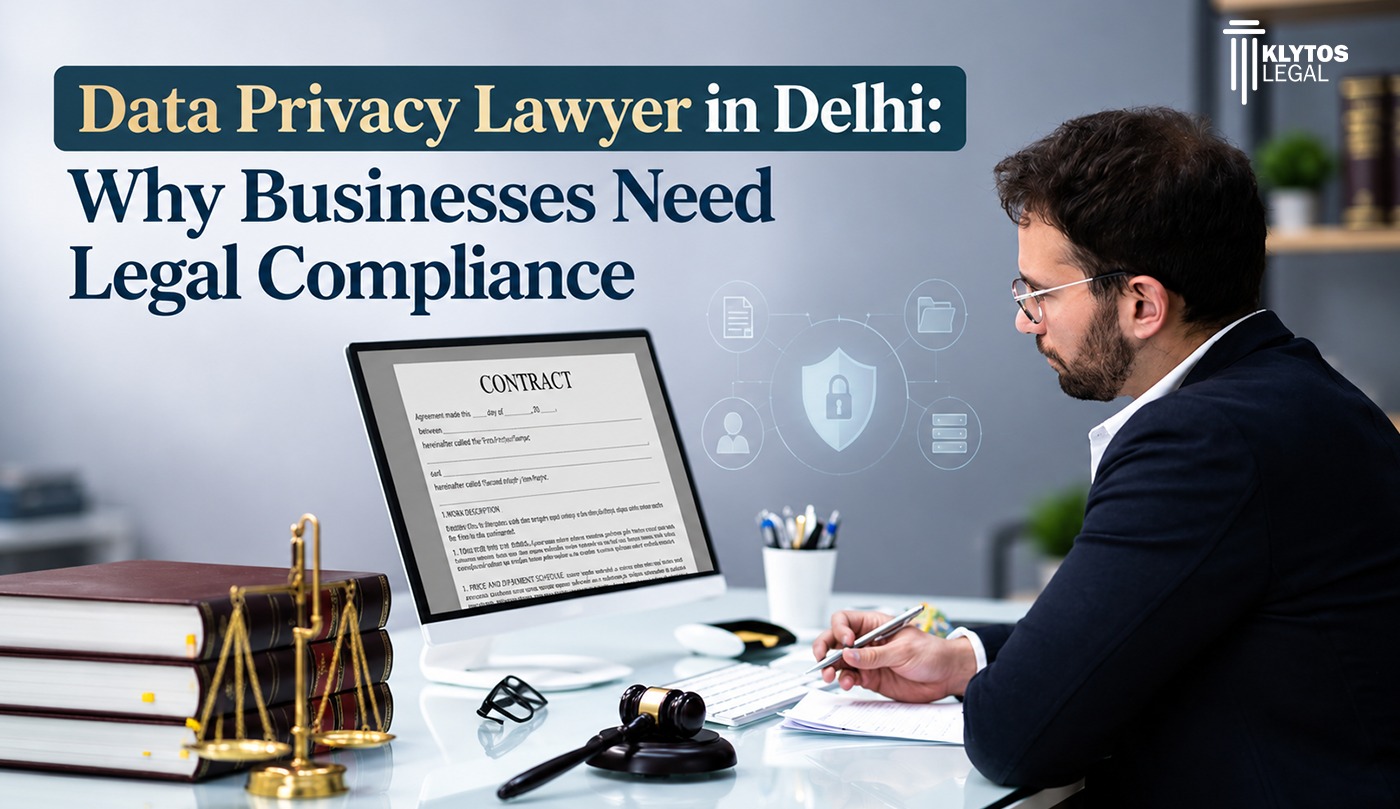
Businesses today collect and use large amounts of personal information. Customer names, phone numbers, email addresses, payment details, employee records, identification documents and online activity may all be part of a company’s day-to-day operations.
As businesses move more services online, data privacy and legal compliance have become important parts of risk management.
A data privacy lawyer in Delhi can help businesses understand their legal responsibilities, review privacy practices, prepare documentation and reduce the risk of regulatory and legal problems.
For businesses operating in Delhi and across India, Klytos Legal provides legal guidance across data privacy, technology law, cyber law, corporate compliance, and regulatory matters, helping businesses address legal risks associated with handling personal data.
What Is Data Privacy Compliance?
Data privacy compliance means following the laws and legal requirements that apply when a business collects, stores, uses, shares or otherwise processes personal data.
In India, the Digital Personal Data Protection Act, 2023 (DPDP Act) provides the legal framework for processing digital personal data while recognising individuals’ rights over their personal data and the need for organizations to process data for lawful purposes.
The government has also notified the Digital Personal Data Protection Rules, 2025, which provide additional details for implementing the framework. The commencement of different provisions is being phased according to the government notification.
This means businesses should not treat data privacy as only an IT issue. It is also a legal, compliance and business-risk issue.
Why Do Businesses Need Data Privacy Compliance?
Data privacy compliance is important for businesses of all sizes, including startups, e-commerce companies, healthcare organisations, financial businesses, technology companies and companies that manage customer or employee information.
Here are some important reasons businesses should take data protection seriously:
1. To Protect Customer Information
Customers trust businesses with their personal information.
A company may collect:
- Name and contact details
- Email addresses
- Phone numbers
- Identity information
- Payment-related information
- Account information
- Employee information
- Customer service records
- Information collected through websites and applications
Proper privacy practices can help businesses reduce unnecessary exposure of this information.
2. To Understand Legal Responsibilities
Data protection laws can create responsibilities for organizations that process personal data.
Businesses need to understand what information they collect, why they collect it, how they use it, who can access it and how long it should be retained.
A data privacy lawyer in Delhi can review these processes and help identify areas where legal compliance may need improvement.
3. To Reduce Legal and Regulatory Risks
Poor data handling can create legal, contractual, regulatory and reputational risks.
A proper compliance framework can help businesses identify potential problems before they become major disputes.
This is particularly important for businesses that handle large volumes of customer data or operate through digital platforms.
4. To Build Customer Trust
People want to know how their personal information is being used.
Clear privacy notices, responsible data handling and transparent business practices can help build customer confidence.
For digital businesses, privacy compliance can therefore become part of the overall trust and reputation strategy.
What Does a Data Privacy Lawyer in Delhi Do?
A data privacy lawyer helps businesses understand and manage the legal aspects of collecting, using, storing and sharing personal data.
Depending on the business and its requirements, legal support may include:
- Data privacy compliance reviews
- Privacy policy review and drafting
- Data processing agreements
- Technology contracts
- Vendor and third-party data agreements
- Employee data compliance
- Customer data practices
- Data-sharing arrangements
- Data protection risk assessments
- Legal advice following a data incident
- Cyber law advice
- Regulatory compliance
- Contractual privacy requirements
- Data-related dispute support
The exact legal requirements can differ depending on the nature of the organisation, the type of data involved and how the business processes that data.
Data Privacy and the DPDP Act: What Businesses Should Know
The Digital Personal Data Protection Act, 2023 is an important part of India’s data protection framework. The Act focuses on the processing of digital personal data and establishes a framework involving organisations that determine the purpose and means of processing personal data and individuals whose data is processed.
Businesses should therefore start by understanding their own data-processing activities.
For example, a company should ask:
What personal data do we collect?
Why do we collect it?
How do we use it?
Who has access to it?
Do we share it with third parties?
How do we protect it?
How long do we keep it?
What happens if there is a data security incident?
These questions can help businesses identify privacy and compliance gaps.
Because different provisions of the DPDP framework have different commencement dates, businesses should also monitor applicable government notifications and implementation requirements rather than relying on outdated information.
When Should a Business Consult a Data Privacy Lawyer?
You do not necessarily need to wait until a data breach or legal notice occurs.
Businesses can seek legal advice when:
- Launching a new website or mobile application
- Collecting customer information online
- Introducing a new digital product
- Sharing data with vendors or service providers
- Entering technology partnerships
- Preparing or updating privacy policies
- Reviewing employee data practices
- Handling sensitive business information
- Responding to a suspected data incident
- Reviewing technology contracts
- Expanding digital operations
- Preparing internal compliance procedures
- Facing a data-related complaint or dispute
Early legal review can help businesses identify problems before they develop into costly legal issues.
What Documents Should Businesses Review for Data Privacy?
A privacy compliance review may involve several documents and business processes.
Depending on the organisation, these may include:
Privacy Policy
The privacy policy should clearly explain relevant data practices and should be reviewed regularly as the business changes.
Data Processing Agreements
Businesses may share data with vendors, technology providers, consultants or other third parties. Appropriate contractual arrangements can help define responsibilities.
Website and App Terms
Online businesses should review their Terms & Conditions, privacy documentation and other website or application agreements.
Employment Documents
Businesses should also consider how employee and candidate information is collected, stored and used.
Vendor Contracts
Third-party service providers may process customer or employee information. Their contracts should be reviewed from a privacy and risk perspective.
Internal Data Policies
Larger organisations may require internal procedures covering data access, retention, security, incident response and employee responsibilities.
Data Privacy vs Cyber Law: What Is the Difference?
Data privacy and cyber law are connected, but they are not exactly the same.
Data privacy focuses largely on how personal data is collected, used, processed, shared and protected.
Cyber law covers a wider range of legal issues involving technology and cyberspace, including cybercrime, online fraud, hacking, digital evidence, technology disputes and other internet-related legal matters.
Klytos Legal’s cyber law practice covers matters involving cybercrime, online fraud, data-related legal issues, digital evidence, privacy concerns and technology-related disputes.
How Can a Data Privacy Lawyer Help Startups?
Startups often collect customer information from the beginning but may not have a dedicated legal or compliance team.
A data privacy lawyer can help a startup establish a stronger legal foundation by reviewing:
- Website privacy practices
- Customer onboarding processes
- Mobile applications
- SaaS agreements
- Technology contracts
- Vendor agreements
- Employee data processes
- Data-sharing arrangements
- Privacy policies
- Terms and conditions
- Data security incident procedures
Getting these areas reviewed early can help startups avoid having to rebuild their compliance processes later.
For startups and growing businesses, data privacy can also be considered alongside corporate legal services, business compliance, contracts and regulatory advice.
Why Data Privacy Matters for E-Commerce Businesses
E-commerce companies commonly collect customer names, addresses, phone numbers, email addresses, order details and payment-related information.
They may also work with:
- Payment gateways
- Logistics companies
- Cloud service providers
- Marketing platforms
- Customer support providers
- Analytics tools
- Technology vendors
This creates multiple points where personal data may be processed or shared.
An e-commerce business should therefore review its privacy practices and third-party arrangements as part of its wider legal compliance strategy.
Why Healthcare Businesses Need Strong Data Privacy Practices
Healthcare organisations handle information that can be highly sensitive.
Hospitals, clinics, diagnostic centres, healthcare platforms and medical technology businesses may process patient information, appointment records, medical documents and other personal information.
For these businesses, data privacy should be considered together with medical and healthcare law, contracts, regulatory requirements and technology compliance.
Klytos Legal also lists medical and healthcare law among its advisory areas, allowing healthcare businesses to consider privacy and broader legal requirements together.
Data Privacy Compliance Checklist for Businesses
Businesses can start with this simple checklist:
Data Collection
- What personal data do we collect?
- Why do we collect it?
- Is the collection process legally appropriate?
Data Usage
- How is the information used?
- Is it shared with other organisations?
- Who can access it?
Contracts
- Do vendor contracts address data-related responsibilities?
- Are data-processing arrangements properly documented?
Privacy Documents
- Is the privacy policy accurate?
- Does it reflect the business’s actual data practices?
- Are website and app terms regularly reviewed?
Security & Incidents
- Are reasonable safeguards in place?
- Does the business have an incident-response process?
- Who handles a suspected data breach?
Compliance Review
- Has the business identified the privacy laws and requirements applicable to its operations?
- Are internal policies and contracts updated when requirements change?
A data privacy lawyer in Delhi can help businesses turn this checklist into a more detailed, organisation-specific compliance review.
How to Choose a Data Privacy Lawyer in Delhi
When searching for a data privacy lawyer in Delhi, businesses should look beyond a generic legal consultation.
Consider whether the lawyer or law firm has experience with:
- Data privacy
- Cyber law
- Technology law
- Corporate law
- Business compliance
- Regulatory matters
- Commercial contracts
- Dispute resolution
It is also useful to choose a legal team that understands how privacy requirements affect actual business operations.
For example, a technology company may need privacy advice alongside technology contracts and intellectual property. A financial business may need privacy advice alongside taxation, regulatory and banking matters. A startup may require privacy support together with corporate and commercial legal services.
Why Choose Klytos Legal for Data Privacy Matters in Delhi?
Klytos Legal is a Delhi-based law firm providing legal services to businesses and individuals across areas including technology, data privacy, cyber law, corporate law, business compliance, taxation, regulatory matters, dispute resolution and litigation. Its office is located at Barakhamba Road, Connaught Place, New Delhi.
The firm’s broader legal capabilities can be useful when a data privacy issue overlaps with another legal area.
Klytos Legal’s team includes Sumit K Batra, Founder & Managing Partner, along with other advocates and legal professionals. Sumit K Batra’s listed practice areas include litigation, taxation and corporate advisory, with representation before forums including the Supreme Court of India, Delhi High Court, NCLT, NCLAT, DRAT and DRT.
This wider legal expertise can be valuable for businesses looking for coordinated advice rather than treating data privacy as an isolated issue.
Final Thoughts
Data privacy is no longer only a technology concern. For modern businesses, it is part of legal compliance, risk management, contracts, cybersecurity and customer trust.
Whether you operate a startup, e-commerce company, healthcare organisation, technology business or established enterprise, reviewing your data practices can help you understand potential legal risks.
If you are looking for a data privacy lawyer in Delhi, Klytos Legal can help businesses evaluate data privacy, cyber law, corporate compliance, technology-related legal matters and other connected legal requirements.
For a business, the goal is not simply to have a privacy policy on a website. The goal is to build responsible, legally informed and practical data-handling processes across the organisation.
Leave a Reply